Skip to content
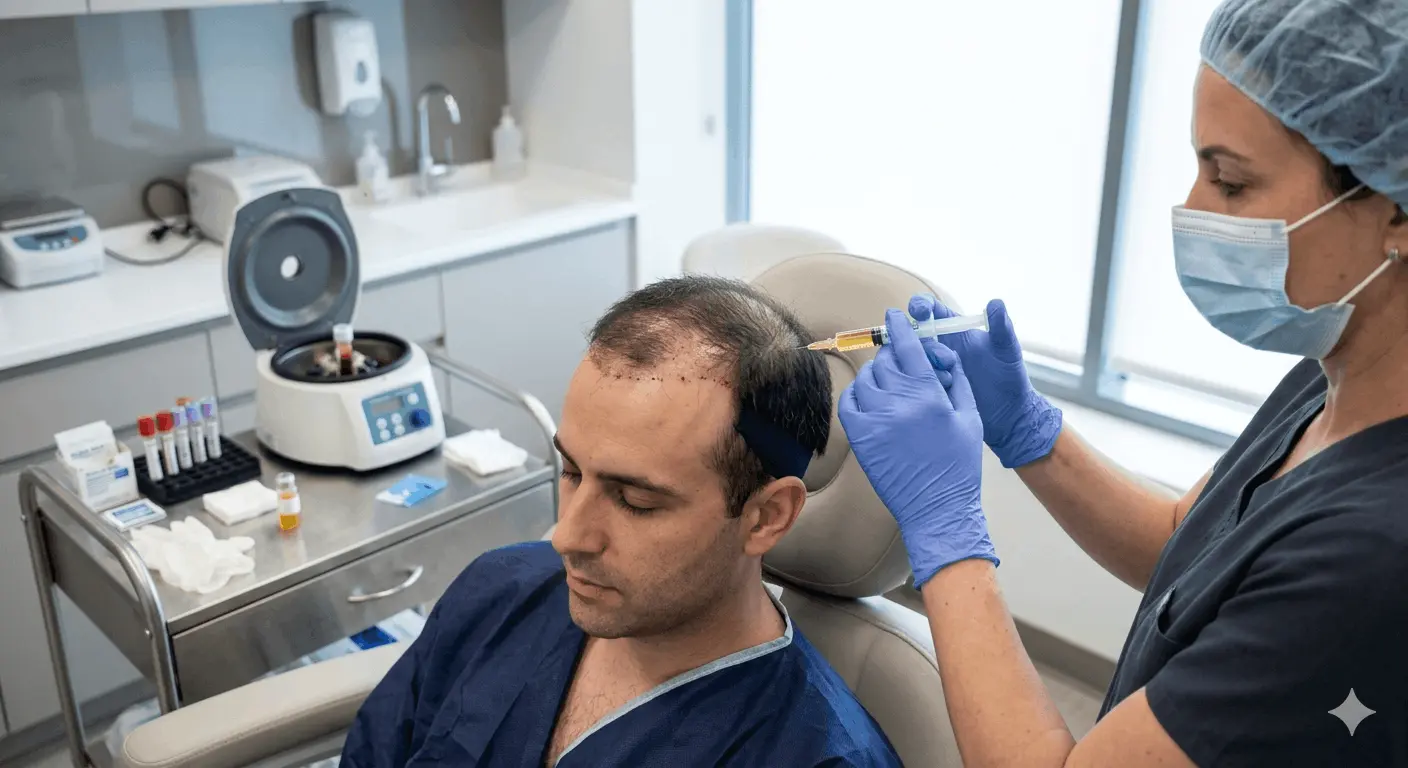
Table of Contents
If you’ve started noticing more hair in the shower drain or less density along your hairline, you’re not alone. Thinning hair is one of the most common concerns patients bring to APEX Performance & Aesthetics, especially when they want an effective, non-surgical solution.
PRP has gained attention as a natural option, but the big question remains. Can it actually make a difference, or is it just hype?
Can PRP hair restoration really help thinning hair?
PRP hair restoration can help slow hair thinning and improve hair density in the right candidates by stimulating inactive follicles. Still, results depend on how early treatment begins and how consistent the sessions are.
How PRP Hair Restoration Works For Thinning Hair
PRP stands for platelet-rich plasma, and it comes from your own blood. During treatment, a small sample is drawn and centrifuged to isolate the platelet-rich fraction. This concentrate is packed with growth factors that support healing and regeneration.
When injected into the scalp, these growth factors signal hair follicles to shift into a more active phase. For thinning hair, this matters because many follicles remain. They are simply underperforming. By improving blood supply and cellular activity, PRP helps create an environment where hair can grow thicker and stronger over time.
This is why PRP hair restoration is most effective in early to moderate thinning. It works by enhancing what is already there rather than replacing lost follicles.
What Causes Hair Thinning And Where PRP Fits In
Hair thinning can happen for several reasons, and understanding the cause helps set realistic expectations. Genetics is a major factor, especially in androgenetic alopecia, in which hair follicles gradually miniaturize. Hormonal changes, stress, and even nutritional gaps can also contribute.
The key distinction is whether follicles are still active. If hair is thinning but still growing, even if finer, PRP for hair loss can help support those follicles. If follicles have been inactive for years and no longer produce hair, the response may be limited.
This is why timing matters. Starting a hair-thinning treatment like PRP earlier often leads to better outcomes than waiting until hair loss becomes more advanced.
Who Is A Good Candidate For PRP Hair Restoration
Not everyone will respond the same way, and that is where a proper consultation comes in. At APEX Performance & Aesthetics, scalp and hair density are evaluated to determine if PRP is a good fit.
Patients who tend to benefit most include those noticing gradual thinning, increased shedding, or early-stage pattern hair loss. Many men and women dealing with androgenetic alopecia fall into this category.
On the other hand, individuals with extensive bald areas where follicles are no longer active may not see the same level of improvement. In those cases, expectations need to be adjusted or alternative approaches discussed.
What To Expect During A PRP Hair Treatment Session
A typical session is straightforward. The process starts with a quick blood draw, similar to routine lab work. The sample is then processed to separate the platelet-rich plasma.
Once ready, the PRP is carefully injected into targeted areas of the scalp. A numbing option can be used to keep the experience comfortable. Most appointments take about 45 minutes to an hour from start to finish.
For best results, a series of treatments is usually recommended. This often includes an initial set of sessions spaced a few weeks apart, followed by maintenance visits over time.
What Results Look Like And How Long They Take
One of the most important things to understand about platelet-rich plasma for hair growth is that results are gradual. This is not an overnight fix. Hair growth cycles take time, and PRP works within those natural phases.
Some patients notice reduced shedding within the first couple of months. Visible improvements in thickness and density tend to appear later as new growth develops and existing hair strengthens.
Because of this timeline, consistency is key. Skipping sessions or stopping too early can limit how much progress you see.
How Long PRP Results Last And Maintenance Needs
Results from non-surgical hair restoration, such as PRP, are not permanent, but they can be maintained. After completing an initial series, many patients continue with periodic maintenance sessions to keep follicles active.
How long results last depends on several factors, including genetics, lifestyle, and how early treatment began. Patients who stay consistent with maintenance often see more stable, longer-lasting improvements.
Supporting scalp health and following provider recommendations also helps extend results.
Ways To Support Better PRP Hair Results
While PRP does a lot on its own, there are ways to support better outcomes. Following the recommended treatment schedule is one of the most important steps. Consistency helps maintain the stimulation needed for ongoing growth.
In some cases, pairing PRP with medical-grade hair care products can enhance results. Scalp health, nutrition, and stress management also influence how well your hair responds over time.
Avoiding habits that contribute to continued thinning, such as poor diet or high stress levels, can make a noticeable difference alongside treatment.
A Smarter Way To Approach Thinning Hair
PRP offers a practical, non-surgical way to address thinning hair by working with your body’s natural processes. It is most effective for early-stage hair loss, supports healthier growth over time, and requires consistency to maintain results.If you are starting to notice changes in your hair density, getting ahead of it can make all the difference. At APEX Performance & Aesthetics, treatments are tailored to your specific hair pattern and goals. Contact and Book Your PRP Hair Restoration Consultation in Sandy Today with our team and take the next step toward stronger, healthier hair.